
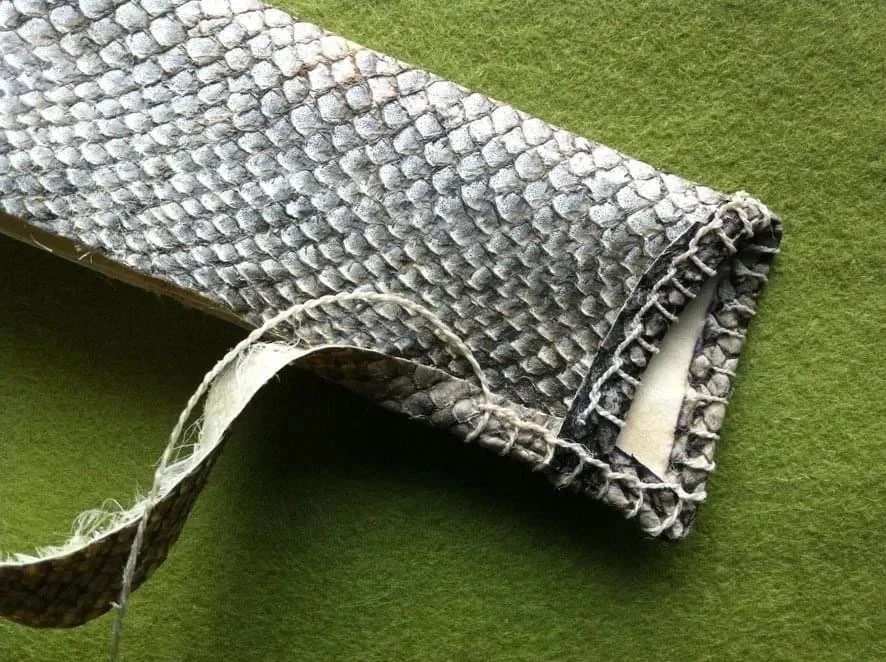
I twined the deer sinew thread used to sew this knife sheath using a two strand reverse twist method. The gorgeous fish skin, deer rawhide and sinew I used to make the sheath were harvested and processed on Kodiak Island by C. Chernoff.
Zoe fishing the Buskin River, Kodiak Island, Alaska.
Fish Skins
I twined the deer sinew thread used to sew this knife sheath using a two strand reverse twist method. The gorgeous fish skin, deer rawhide and sinew I used to make the sheath were harvested and processed on Kodiak Island by C. Chernoff.
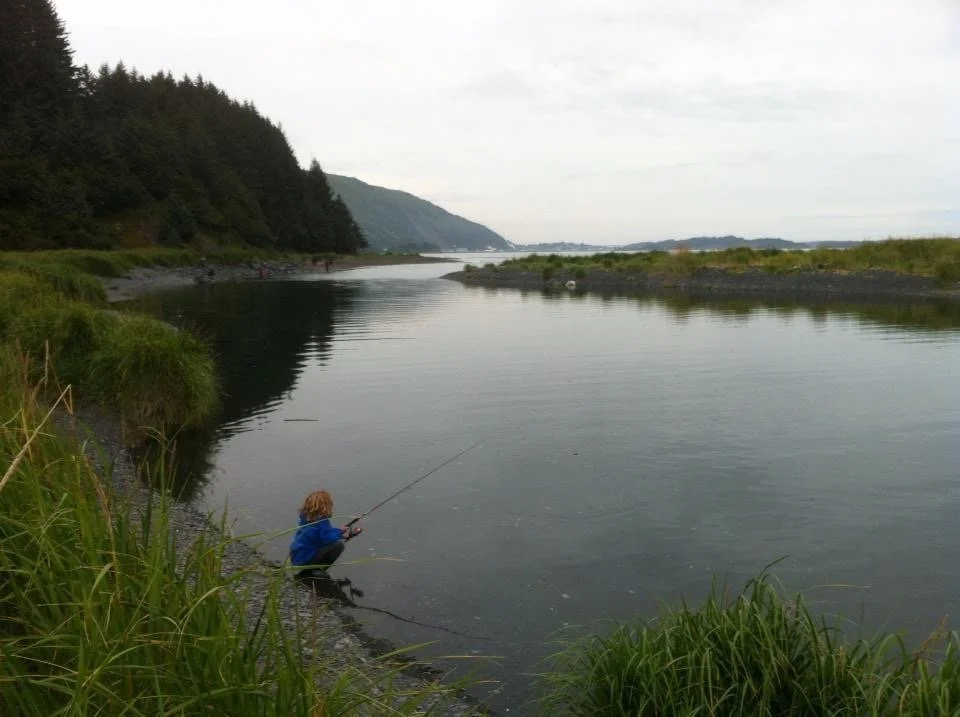
Zoe fishing the Buskin River, Kodiak Island, Alaska.
How does one process fish skin? First, you need a fisherman – or fishergirl! This is my granddaughter – she caught the spawned-out salmon for me on the board to the right.
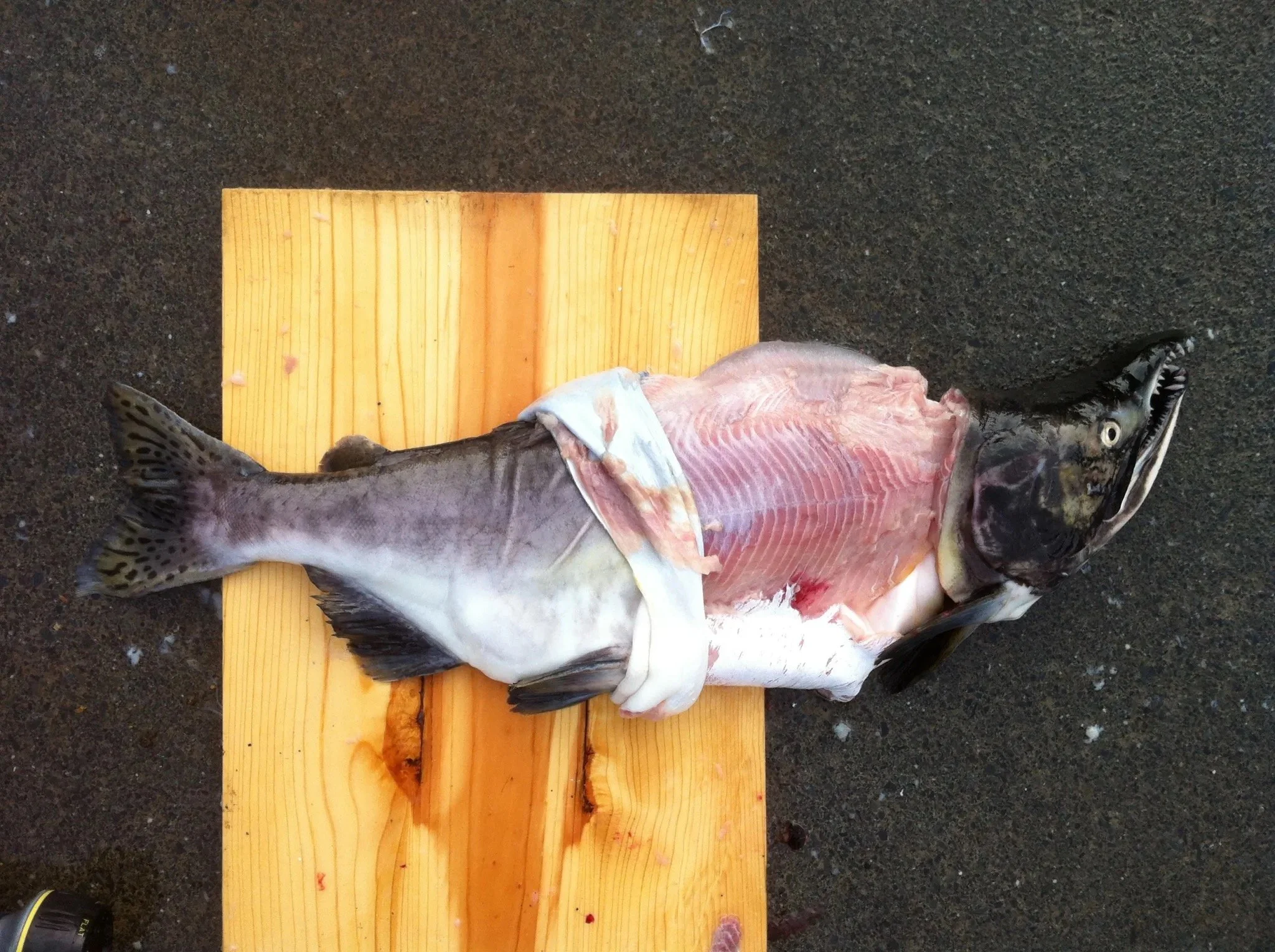
After you have the skin, you scrape off the meat on the inside of the skin and place it in a canning jar with urine. I have left skins soaking for up to 9 months without issue.
My husband has always generously provided his urine but in researching the process I read that on Kodiak Island prepubescent male urine was favored.
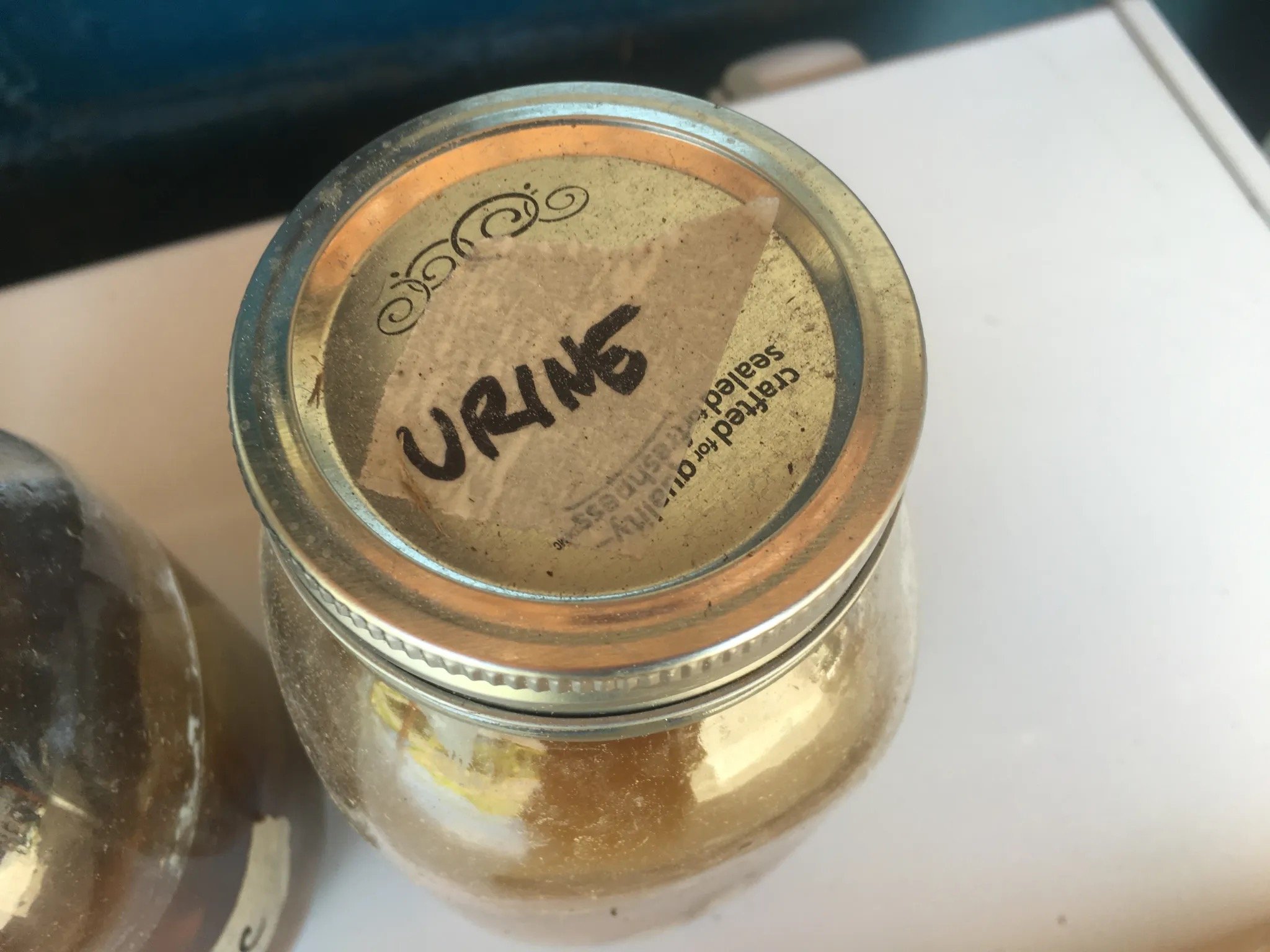
In my experience, you must let the urine “season” a bit to allow the product to separate and turn into ammonia which is a fabulous degreaser.
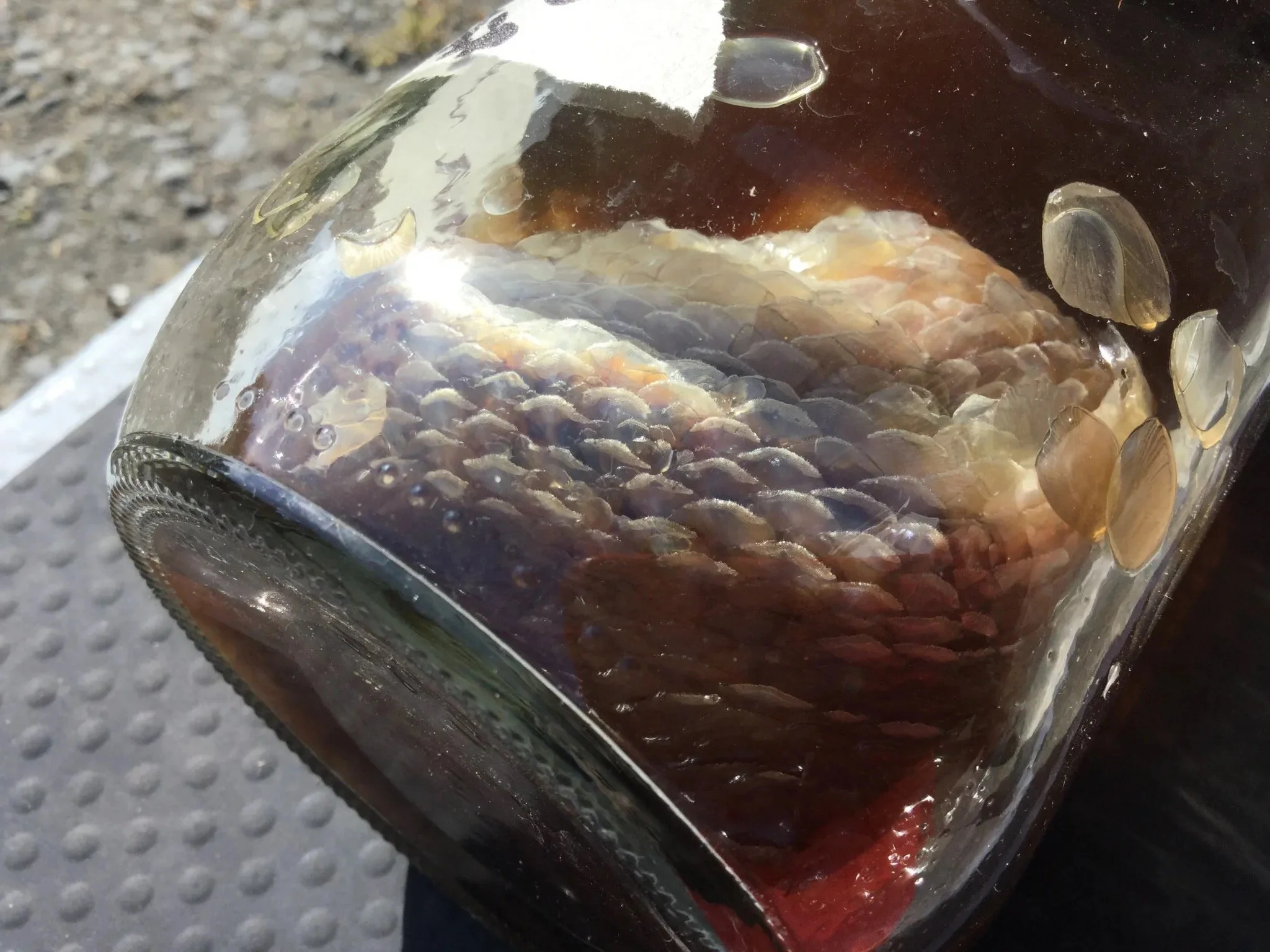
No need to remove the scales before soaking the skins in urine.
Weeks to months later, I take the jars outside and rinse the skins. The scales come right off especially when the skins have soaked for many months. Then I work egg yolk (lecithin emulsifier) into the skin until my hands are tired and the yolk is thick and dry. Later I work to soften my dry skins just like you would an animal hide (breaking - pulling/stretching). If you skip this final step, your skins will likely be stiff.
The outstanding properties of fish skin include the fact it has no orientation and compares to Tyvek. Like Tyvek, fish skin is not easily torn. Shoes and other objects that needed to be durable were often made of fish skin by Alaska Native people.
King salmon skins are especially beautiful when processed correctly. Many Alaska Native artists have secret processing methods – some more chemically inclusive than others. My goal was to utilize the easiest least noxious method to achieve my preferred feel and texture. I have tried raw whipped deer brain and salmon roe but like the simplicity and outcome of egg yolk the best. While brain appears to work the best, it isn’t exactly something I normally have in my refrigerator. (As an aside, I have been told the size of an animal’s brain is just the right amount of material needed to tan their hide.)
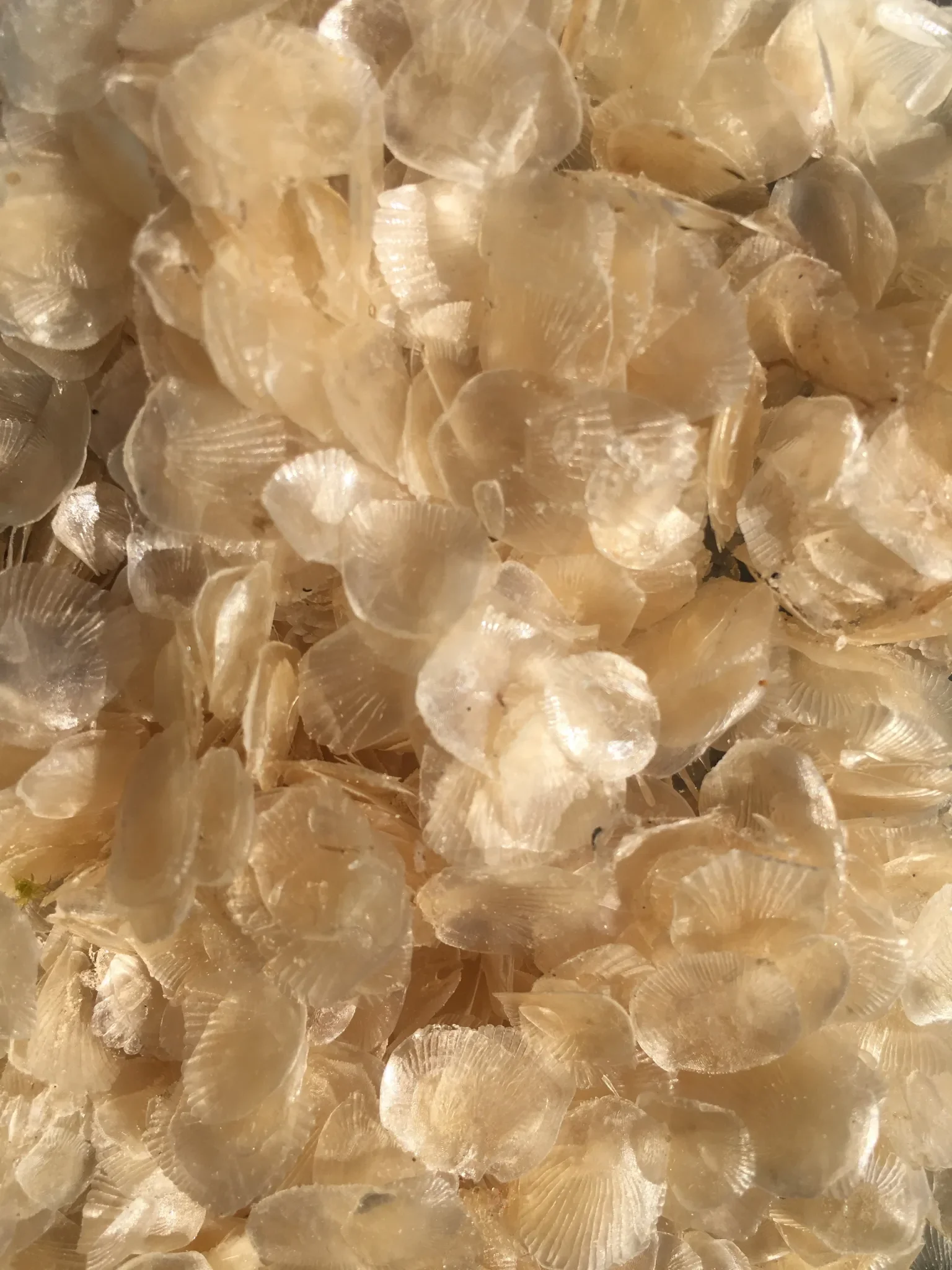
Fish scales - dry after soaking and rinsing
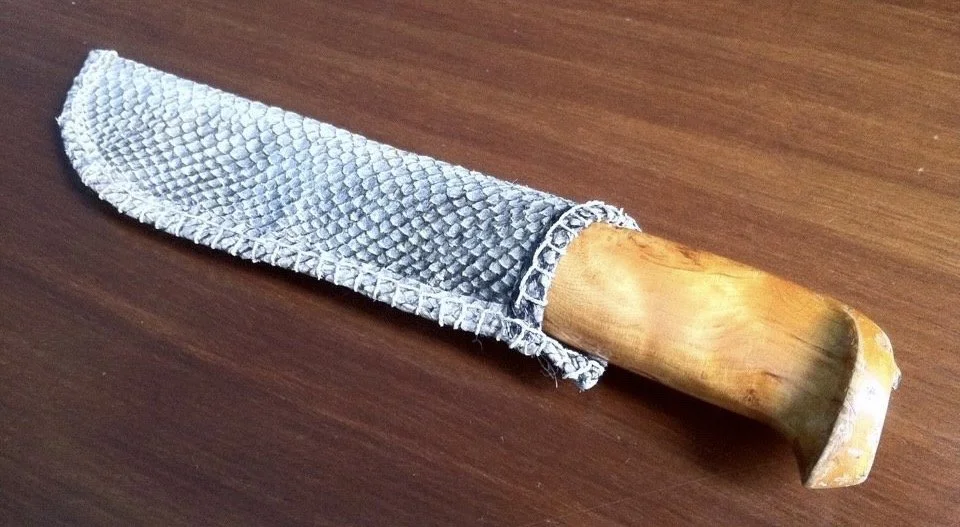
Fish skin sheath complete with Sami knife
I think my interest in such things stems from true reverence for the knowledge and ingenuity ancient people expressed in their daily lives especially living in cold weather environments that can be unforgiving. I am grateful to have lived in Alaska for so many years and to have learned a little about the old ways from Alaska Native Elders who were willing to share to keep the knowledge alive. And, as with anything, trying things with your own hands provides the best learning opportunity. Maybe the next time you look at a fish skin you will see more than food.
© 2016 Jill HH Lipka. All rights reserved. Updated version © 2026 Jill HH Lipka. All rights reserved.